
Tony Howell Photography
64 Penwethers Crescent
Truro, Cornwall
TR1 3GH
United Kingdom
01872 242291
Mobile: 07867 660988 (Please try landline first)
Office Hours: 9 - 5:30pm Monday - Friday Find the current time here in UK
Email: tony@tonyhowell.co.uk
Great images - Beautiful Prints. Delighting customers worldwide for 30 years
'The Natural World captured by a Master Photographer' - Shutterbug Magazine
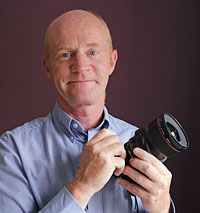
Tony Howell
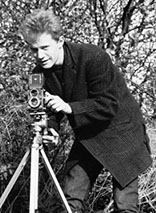
Tony in 1982 with Rolleiflex 2.8F (and hair!).
I'm a professional landscape photographer with happy customers all over the world, based in Truro, Cornwall. Prints are made here in my workshop (except largest sizes) to ensure you'll be delighted.
'Hi Tony, The framed print has arrived and we're over the moon with it - our friends will love it. Thank you soooo much again. Regards, S.J, Wales'
'Thank you for the amazing framed photograph of the Cabot Tower in Bristol. It’s truly amazing. It arrived speedily, safely and well packaged. I am absolutely delighted with both the quality of the photograph and the frame. Thank you once again, Kindest Regards, EW London'
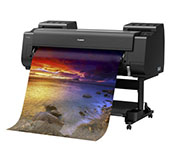
 Many happy customers in over 27 countries worldwide - see reviews
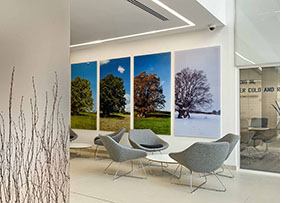
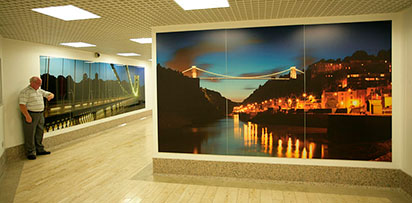
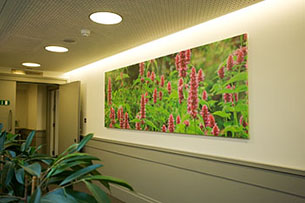
I've written three Photography books and my images have been used in over 15 books, over 100 calendars, countless magazines, on television, billboards, brochures, greeting cards, newspapers and much more. I also teach photography in workshops
Clients include National Geographic, The BBC, Christies, Royal Mail, The Tate, The National Trust, Penguin Books, Unicef, The Forestry Commission, & many more (see Client List) I'm represented by various photo libraries; Getty Images, Flower Photos and National Trust Photo Library















More About Tony Howell
'When I started using a camera in 1977, I really started seeing the world properly for the first time. I take photographs because I'm interested in anything beautiful, but particularly the natural world. I just love nature; I love the creative process, and tuning in to my own interpretation of the subject; trying to express my feelings about what I see. I hope to get my message across in my images: - peace and joy through beauty. Concentrate on beauty and it infuses your life. It can be a spiritual experience that lifts me higher; mostly when I'm photographing, but also when I make a great print and relive being there. Taking photographs makes me seek out beauty, which then uplifts me. I'm not just doing it for myself; I've received many thank you messages from people over the years. My work has uplifted them too, and many say it inspires them. This is surely the greatest compliment, and spurs me on to to capture more fine glimpses of this ever-changing world'.
'The camera is an instrument that teaches people how to see without a camera' - Dorothea Lange
Why did you take up photography? First of all my father gave
me a Kodak Instamatic at age 17. I took sunrises and sunsets, then a friend showed
me a photography magazine. I looked at some of the images and thought
'I could have taken that' - so I got a better camera, and suddenly I saw
the world with new eyes. I was hooked from the start
Where were you born? Plymouth, England in 1960
When did you start? In 1977, then I bought my first
proper camera, a Pentax K1000 35mm SLR in 1979.
In 1982 I bought my first medium format camera (Rolleiflex 2.8F, 6x6cm)
and was bowled over by the
quality of bigger transparencies. Next I bought a 5x4 inch camera - I always wanted the best image
quality. Now I use very high quality digital cameras, see Gear
What qualifications do you have? None. I'm self-taught, entirely
trial and error starting with ideas from books and magazines in the 1980's. What has made me
into a photographer is simply this - a real love of the natural world, plus plenty of practice and dedication. I also happen to be something
of a perfectionist, which means a lot of my images are discarded.
I found I had a natural eye for composition from the start;
I never had to study or even think about it much, I knew when it was
right instinctively
When did you first exhibit your work? I had four images in an exhibition in Clifton, Bristol in 1985
Was it easy to make it as a freelance? No. You need plenty
of patience and more marketing skills
than photographic ones. You need to find your market. I spent several years on a low income. It was a difficult
time for me, but I worked hard with real determination to succeed, driven
by a passion for photography which remains undiminished to this day.
Taking photographs is a real joy, and the business side of being a freelance
I also enjoy, but it is hard work. Overall though, I love my job
Who are your main clients? Book, Calendar and magazine
publishers, Design Agencies, Corporate clients
plus print sales to the general public
Which photographers have inspired you? Ansel Adams and Paul
Strand, both legendary black and
white photographers inspired me at the start. I don't believe the
life of anyone parallels another though,
and I found my own style and stay true to myself. 'It's what you see, and what you have to say about life that's important' - Paul Strand. People say I'm a talented photographer, which I am, but you only get somewhere by working hard. Photographers tell me I inspire them, and that's the greatest compliment,
but you have to find your own voice - don't try and
be like someone else. What do you have to say about life?

What cameras do you use now? I don't think the camera you
use is as important as your 'vision' - it's what you see that counts - and plenty
of practice, but I use high quality mirrorless cameras which allow me to do very large prints, which some clients demand. My preferred settings are Manual exposure, normally with f/8 aperture using the best lenses I can buy, capturing images in RAW, which I later make a master file from in Adobe Lightroom and Photoshop
What camera would you recommend? I get asked this all the time, and it's not easy to answer. The best camera for you depends on so many factors. These days I prefer Sony mirrorless cameras; great resolution, dynamic range and light to carry around (after years of lugging heavy camera gear everywhere!). Buy a full-frame Sony Mirrorless with a Tamron DiIII lens like this one and you'll be off to a great start - these lenses are a rarity; superb quality for a great price. I've used Canon, Fuji, Hasselblad, Nikon, Phase One and Pentax; they were all good but Sony have a superb choice of lenses and really good video. The Sony A7RV is the best camera I've ever used. A great camera review website: The Digital Picture




What is it about nature that you love? Everything; the peace, the sounds, the air, the flora and fauna, but most of all the beauty
What do you find so interesting about creating images of natural scenery? I'm expressing the way I feel about nature in a personal way that has made a lot of people happy, as they've shared in the beauty I saw
What types of photos do you personally enjoy creating? Great scenes that make the viewer wish they were there, that are technically excellent, that show a rare moment that not many see, and that are among the best I've ever seen of that location
What's the best thing about your job? I really enjoy the challenge of doing a great job when commissioned, love meeting and teaching other photographers, love making superb prints that I know my customers will also love, but I also love it when I have a few spare hours, and I can then set off to take my own photographs. Bliss.
What does a typical day consist of? If the weather report looks promising, I may get up before dawn and travel to somewhere local to photograph. Then I work in the office from 8am and reply to emails which normally takes an hour. I may then have to send a few images to clients, and then start printing my orders. This could easily take the rest of the day. I always have a backlog of images to process, so if I have time I then start working on my RAW files. When I'm on a commission, I'll spend a few hours preparing my camera gear and researching how to go about the work, ready for the next day. One day I may spend 9 hours on the computer and hardly leave my seat. Another day I may be driving for several hours, then do lots of walking under pressure to fulfil a clients brief. Other times I could be on a beach, taking my own photographs, feeling exhilarated
Do you use filters? Hardly any. I use a polarising filter to reduce reflections and glare on water. I also use neutral density filters to reduce the shutter speed for moving water and clouds. Everything else is done in Lightroom/Photoshop.
Do you feel there is a deeper meaning to your photographs? For instance any significant landscapes containing personal memories or emotions? Most of my images contain personal memories and emotions of the joy and challenge of photographing them. As for deeper meaning, I try to do justice to God's incredible Creation and express peace and tranquility, to hopefully move the viewer into a peaceful state, more appreciative of the beauty in nature, and maybe even spiritually uplifted
What inspired you to do landscape photography? Beautiful scenery. I've always loved pictures that make you wish you'd been there. I have been there quite a lot!
How long do you spend photographing each landscape? anything from 20 minutes to several hours, then often I'll return several times in different lighting conditions. Persistence is the name of the photography game
Do you spend a great deal of time using photoshop/lightroom? Yes, from 20 minutes to 2 hours on each image
Do you travel abroad to work as well as in the UK?I used to, but nowadays I specialise in the South-West of England, and there are more than enough pictures here for one lifetime.
What is your favourite image of the ones you've made? No one favourite, but I've always liked this one from 1980 (click for larger version): -
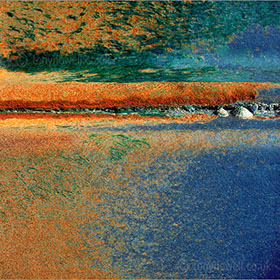
All of my pictures remind me of where and when I took them,
so they're like a document of my life.
My memory isn't too good, but my visual memory remains sharp thanks
to photography
What advice would you give to beginners? You have
to do what you love, and be true to yourself. Specialise in your chosen
subject, get plenty of practice, know your camera well - then learn
about marketing if you want to succeed as a freelance. Read
books and magazines for tips, but put it all into
practice. Like most things in life, practice makes perfect,
and I learned more from mistakes than successes, which is why practice
is so important. Practice builds your experience and confidence to
greater levels. Be realistic. Being a landscape photographer is the
best job in the world, but it doesn't make much money. If you want
to make money, do fashion, wedding or advertising photography, or if all else
fails, get a proper job
Would you recommend a career in Landscape Photography? Only
if you absolutely love it and are
prepared to earn low wages for years. It is hard work, but to
me, it's the best job in the world; however, it doesn't pay well,
so if you want a big house become a doctor or a lawyer. It may not
make you happy though, and I'm happy
How would you recommend someone to market their photographs? Oh dear, not an easy one that. Perhaps start small, selling at Art/Craft Fairs? Doing work for low pay to get a foot in the door? I think specialising is probably the key. Too many people want to take landscapes but the market simply isn't big enough. Specialise in something you love, and if you can't do that, just do photography for fun
Any other tips? There are thousands of good photographers
out there. You have to do something different or better than them.
Also, learn all you can about technique - but break the rules sometimes.
Strive to be different, and specialise in a subject you're
passionate about See
also Photography tips
What are your future projects? I'll always love
photographing the South West of England, so will do that until I can't. If I ever get the time, I'd like to do a series on old people. They deserve much more respect than they get from todays society. They're just us in an older form - wouldn't you want to be respected?
NOTE TO STUDENTS
This page (only) can be copied from as you wish; however all images
and all other pages are under strict copyright. The only permitted
use for images is up to ten can be used for your photography course
folder only.
Any other use is strictly prohibited under UK Copyright law.
If you'd like to find out more about becoming a photographer and improve your
techniques at the same time, come to a WORKSHOP



Contact Us | Terms & Conditions / FAQ | Home